







Cross-border payments remain one of the most expensive and inefficient segments of global finance. Legacy correspondent banking networks impose settlement delays, fragmented FX conversion layers, and substantial operational costs. For institutions exploring alternatives, Ripple’s XRP-based liquidity model—delivered via RippleNet and On-Demand Liquidity (ODL)—is gaining renewed attention.

XRP cross-border liquidity has evolved from a theoretical value proposition into an active toolkit for financial institutions, fintechs, and payment providers operating in high-volume remittance corridors and emerging markets. As regulatory clarity improves and liquidity deepens, institutions are increasingly viewing XRP not just as a speculative asset but as infrastructure.
This blog explores how XRP powers institutional use cases across treasury management, FX optimization, and real-time settlement—reinforced by insights relevant to digital asset strategy consulting firms, portfolio management consultants.
The Institutional Case for XRP Liquidity
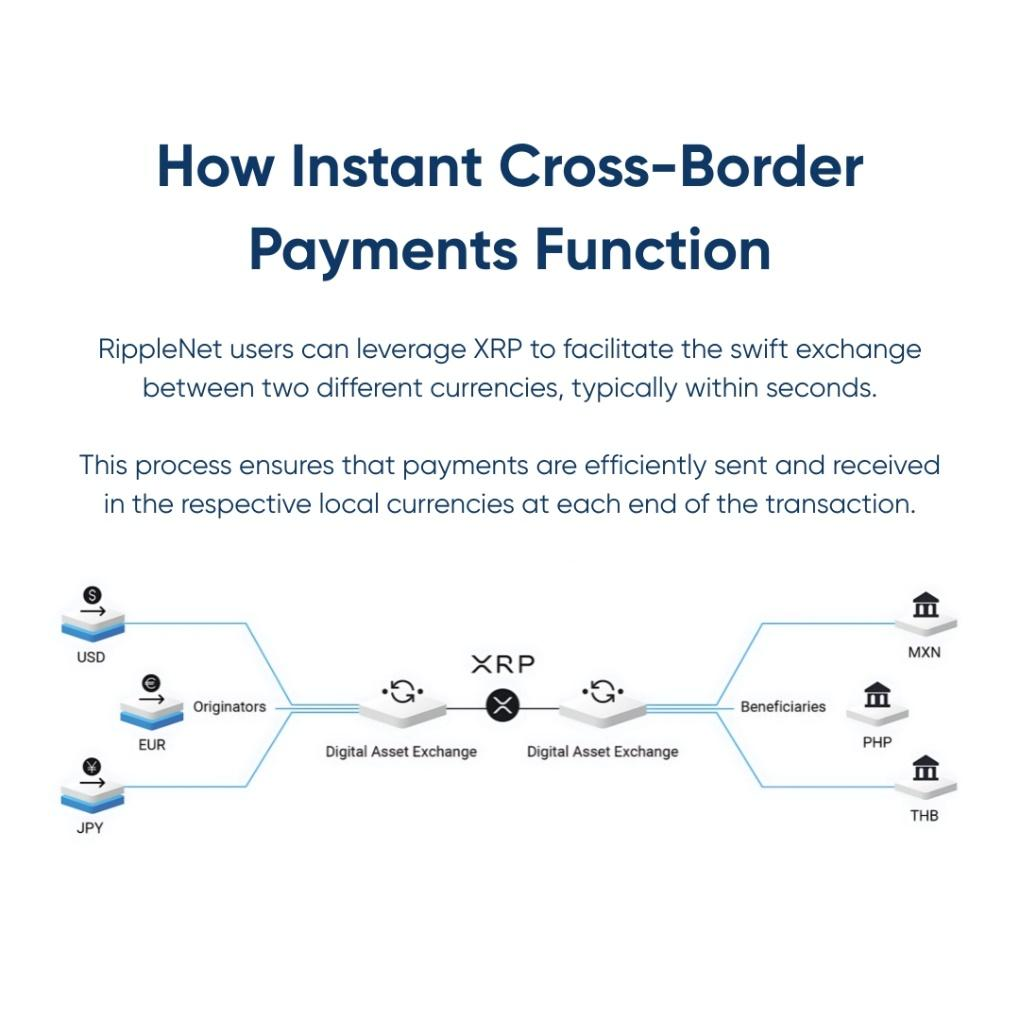
At the core of Ripple’s ODL product is the use of XRP as a bridge currency. This allows financial institutions to:
- Eliminate the need for pre-funded nostro/vostro accounts
- Access real-time FX at market rates
- Settle cross-border transactions in seconds, not days
For institutions dealing with high-volume, low-margin flows—such as payroll providers, remittance networks, and treasury desks—this presents a powerful proposition.
According to Ripple’s 2024 financial disclosures, RippleNet processed over $30 billion in volume across more than 70 markets, with a significant portion routed through XRP-based liquidity. Notably, 75% of Ripple’s clients that engage in cross-border flows now use ODL.
This model has gained traction with crypto investment companies, stablecoin investment consultants, and DeFi finance consulting services seeking FX efficiency for tokenized transactions or offshore cash mobility.
How On-Demand Liquidity (ODL) Works
Let’s consider an example:
A fintech in the UAE wants to send 1 million pesos to the Philippines. Instead of holding pesos in a local account, the fintech sends AED to a local crypto exchange, converts it to XRP, sends it via RippleNet, and the receiving exchange instantly converts it to PHP for the payout—often in under 30 seconds.
This system removes the need for:
- Costly pre-funding in destination currencies
- Layered FX intermediaries
- Traditional SWIFT-based correspondent banking timelines
Blockchain and digital asset consulting experts working with remittance or payroll clients often highlight this as a model for lean, scalable international treasury.
Treasury and Working Capital Optimization
Institutions that operate in multiple currencies must maintain cash buffers across jurisdictions. This ties up capital that could be redeployed for revenue-generating activity.
With XRP cross-border liquidity, institutions can:
- Reduce idle capital tied up in foreign currency accounts
- Avoid FX spread losses by accessing direct exchange routing
- Shorten the cash conversion cycle through instant settlement
These efficiencies are particularly valuable for digital asset portfolio management and crypto asset management teams seeking to enhance treasury liquidity without counterparty overexposure.
Regulatory Developments and Jurisdictional Adoption
The long-running legal battle between Ripple and the U.S. SEC saw a significant milestone in 2023, when a federal judge ruled that XRP sales on public exchanges did not constitute securities offerings. While institutional sales are still under scrutiny, the judgment provided a degree of operational certainty that sparked broader institutional interest.
In 2024, Ripple secured a Major Payments Institution (MPI) license in Singapore, expanded corridors in Africa and Latin America, and signed partnerships with regional payment networks.
This has brought XRP use into the conversation for digital asset consulting for compliance, particularly as institutions begin to develop cross-border frameworks that avoid capital controls or enhance payment optionality in less liquid regions.
Case Studies: Practical Use in Remittance and Trade
1. Tranglo and Pyypl
Ripple’s regional partners have scaled ODL corridors in the Middle East, particularly in the UAE and Bahrain, supporting expat remittances to South and Southeast Asia. These corridors now settle in seconds—without pre-funding—and maintain end-to-end transparency.
2. SBI Holdings and Japanese Banks
Ripple’s Japanese partner SBI has integrated XRP liquidity into regional settlement systems, enabling banks to reduce FX friction and speed up B2B payments across Asia.
These real-world deployments underscore the potential for real world assets crypto investment, altcoin investment options, and digital asset investment solutions developers seeking programmable liquidity outside of traditional rails.
How Institutions Should Evaluate XRP Liquidity
Before integrating XRP-based solutions, institutional teams should conduct due diligence across:
- Counterparty Risk: Ensure RippleNet partner exchanges and liquidity providers are licensed and compliant.
- FX Spread Volatility: While XRP enables rapid settlement, conversion spreads may vary in low-liquidity corridors.
- Custody & Integration: Confirm that digital asset custodians support XRP and RippleNet protocols.
This is where digital asset management, security tokens investment, and real-world asset consultants contribute value—by creating frameworks that balance operational speed with risk management.
Expert Perspectives and Industry Sentiment
In a 2025 podcast interview, Ripple President Monica Long stated:
“The core value of XRP is not in speculation—it’s in removing friction for real businesses moving real money across borders. We’re seeing banks and fintechs treat XRP as infrastructure, not exposure.”
This sentiment is echoed by independent researchers at Messari, who report that ODL-based flows have grown over 60% year-on-year, with key growth drivers being B2B payments and treasury automation.
XRP vs. Stablecoin Liquidity
While stablecoins like USDC are widely used for remittance, they require counterparties to hold and manage the stablecoin itself—introducing custody complexity and regulatory dependencies.
XRP’s model allows for instantaneous liquidity bridging, where institutions don’t need to hold crypto long-term. The asset acts as a real-time value conduit, not a balance sheet liability.
This makes it appealing for real world DeFi investment consultants and digital asset consulting for startups building FX layers for tokenized trade finance or on-chain treasury workflows.
Strategic Role in the Tokenized Economy
XRP’s infrastructure layer—when combined with smart contract systems or tokenized assets—can enable:
- Instant settlement of tokenized invoices and securities
- Cross-chain liquidity for real world assets
- Compliance-aware FX rails for digital capital markets
These use cases position XRP as a settlement layer within investment analysis and portfolio management strategies involving tokenized credit, cross-border receivables, or asset-backed stablecoins.
XRP cross-border liquidity is no longer a fringe concept. With maturing infrastructure, real-world adoption, and deeper institutional onboarding, XRP has carved out a role in transforming how institutions move money across borders.
From remittance corridors to treasury workflows, RippleNet’s XRP liquidity layer delivers speed, flexibility, and FX efficiency that legacy systems cannot match.
Optimize Institutional Liquidity
At Kenson Investments, we specialize in designing compliant, scalable liquidity frameworks using XRP and other digital assets. Our team of digital asset strategy consulting firm experts works with institutions to model real-world use cases and minimize operational risk.
Connect with a Kenson Digital Asset Specialist to learn how XRP-based solutions can enhance your global liquidity infrastructure.
Disclaimer: The information provided on this page is for educational and informational purposes only and should not be construed as financial advice. Crypto currency assets involve inherent risks, and past performance is not indicative of future results. Always conduct thorough research and consult with a qualified financial advisor before making investment decisions.
“The crypto currency and digital asset space is an emerging asset class that has not yet been regulated by the SEC and US Federal Government. None of the information provided by Kenson LLC should be considered as financial investment advice. Please consult your Registered Financial Advisor for guidance. Kenson LLC does not offer any products regulated by the SEC including, equities, registered securities, ETFs, stocks, bonds, or equivalents”