








Digital asset markets are frequently framed through the lens of price volatility and speculative opportunity. Yet for institutional investors and long-term capital allocators, the defining variable is rarely the latest market movement. Instead, it is the time horizon through which the investment thesis is evaluated. In emerging asset classes, where technology cycles and infrastructure development unfold over years rather than weeks, aligning strategy with a realistic crypto time horizon becomes a foundational component of risk management.
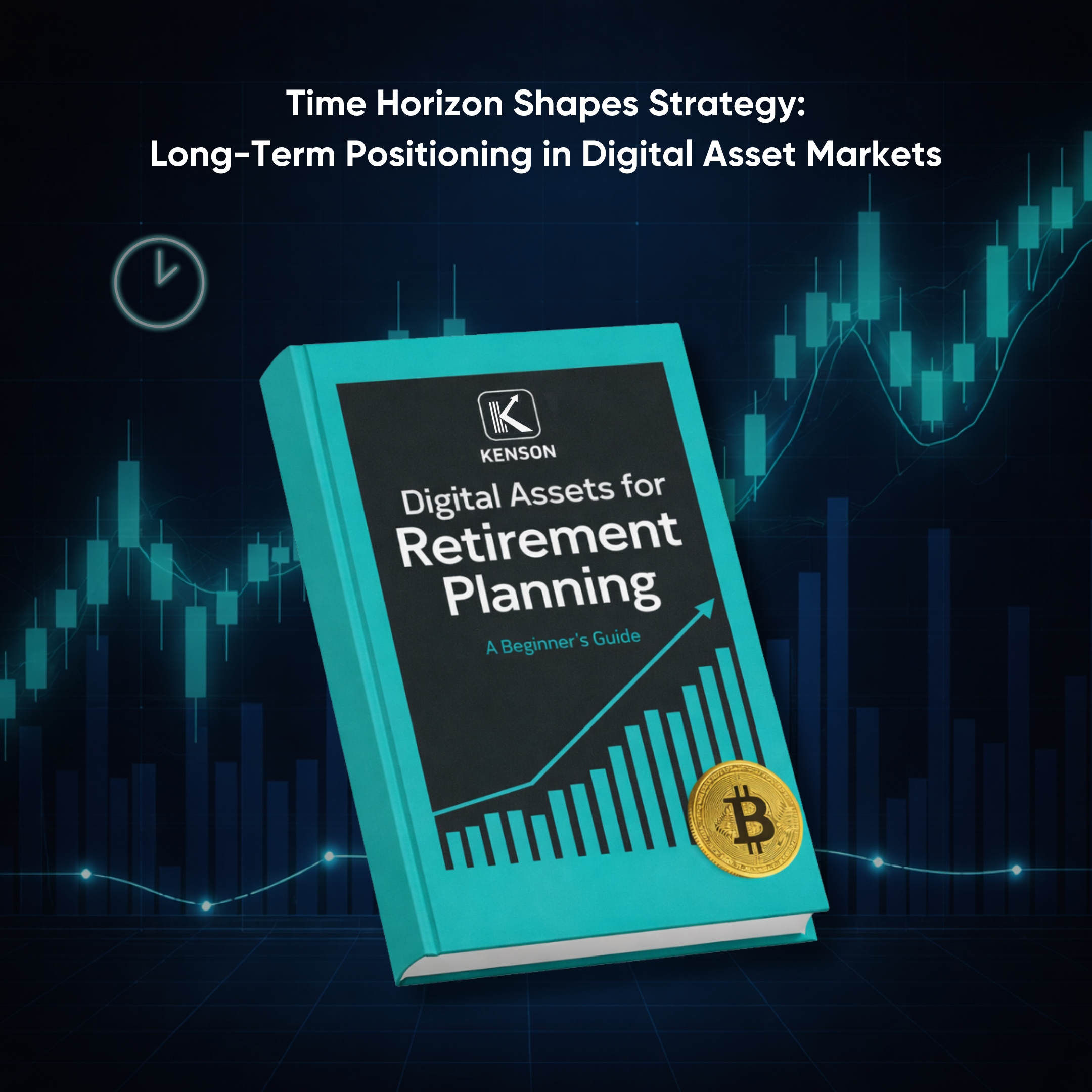
Global digital asset markets illustrate why time horizon matters. Bitcoin experienced price drawdowns exceeding 70 percent during both the 2018 and 2022 market cycles, while still delivering compound returns that exceeded most traditional asset classes across a ten-year period. According to market data compiled by major research platforms, Bitcoin’s annualized return since 2013 has remained above 60 percent despite repeated periods of extreme volatility. These cycles reinforce a core principle discussed in Digital Assets for Retirement Planning: investor outcomes depend less on entry timing and more on whether participation aligns with long-term digital asset planning basics.
For institutional allocators managing large portfolios, the distinction between short-term positioning and long-term exposure directly influences liquidity planning, governance oversight, and capital preservation.
Structural Risk and Short-Term Market Cycles
Short-term trading strategies in digital assets are often shaped by market narratives rather than structural fundamentals. Liquidity surges during speculative cycles frequently attract retail participation and algorithmic trading activity, amplifying price swings across smaller tokens. During the 2021 market expansion, for example, total cryptocurrency market capitalization exceeded $3 trillion before declining by nearly two-thirds during the subsequent correction.
The Bank for International Settlements has repeatedly highlighted the procyclical nature of digital asset markets. In its research on crypto market dynamics, the BIS observed that leverage, derivatives activity, and speculative capital flows often amplify volatility during short-term trading cycles. This dynamic creates a structural divide between traders pursuing short-term price momentum and investors focused on long-term infrastructure adoption.
For institutions responsible for investment analysis and portfolio management, this distinction influences asset selection. Major networks such as Bitcoin and Ethereum typically maintain deeper liquidity and broader institutional participation compared with smaller tokens. Evaluating altcoins vs. major cryptocurrencies therefore often becomes a question of time horizon. Short-term traders may pursue narrative-driven opportunities, while long-term investors prioritize durability of network infrastructure.
Understanding these structural differences increasingly informs the work of firms providing blockchain and digital asset consulting and other forms of institutional research.
Institutional Behavior and Long-Term Allocation
Institutional investors approach digital assets through a markedly different framework than retail market participants. Surveys conducted by Fidelity Digital Assets indicate that roughly 74 percent of institutional investors expressed interest in digital assets by 2024, yet most institutions allocate capital through multi-year investment horizons rather than short-term trading strategies.
This approach reflects the operational realities of institutional portfolios. Pension funds, endowments, and sovereign wealth funds operate under long-term mandates where capital deployment must align with strategic asset allocation models rather than tactical speculation. Digital assets are therefore often evaluated alongside other long-duration exposures such as venture capital or emerging technology investments.
BlackRock’s entry into digital asset markets provides a clear example of this shift. The firm launched a Bitcoin spot exchange-traded fund in 2024, which attracted billions in assets within its first months of operation. While the product enables daily trading, the underlying investment thesis centers on long-term adoption of digital financial infrastructure rather than short-term price fluctuations.
For institutions evaluating digital asset investments, this distinction reinforces the importance of aligning allocation decisions with realistic investment horizons rather than reacting to market sentiment.
Regulatory and Infrastructure Developments
Regulatory developments are also shaping how time horizon considerations influence digital asset participation. Europe’s Markets in Crypto-Assets regulation introduced comprehensive oversight of exchanges, stablecoin issuers, and custodial services operating within the European Union. By establishing clearer compliance frameworks, MiCA aims to encourage institutional participation while discouraging speculative excess.
Central banks are similarly exploring long-term digital financial infrastructure. The Hong Kong Monetary Authority’s tokenization initiatives and the European Central Bank’s digital euro pilot reflect growing interest in blockchain-based settlement systems within regulated financial environments.
Meanwhile, institutional infrastructure continues expanding rapidly. Stablecoin circulation surpassed $160 billion by late 2025, functioning as settlement instruments across global trading venues. At the same time, tokenized real-world assets have grown into a market exceeding $30 billion in on-chain value according to tokenization monitoring platforms.
These developments highlight why digital asset consulting for compliance and operational design has become increasingly important as institutional adoption accelerates.
Operational Realities for Asset Managers
Managing digital asset exposure within institutional portfolios requires aligning operational systems with the intended investment horizon. Short-term trading strategies demand continuous liquidity monitoring and rapid execution capabilities. Long-term holdings, by contrast, emphasize custody security, governance oversight, and strategic allocation discipline.

Custodial infrastructure now plays a central role in enabling institutional participation. Firms such as Fidelity Digital Assets and Coinbase Custody maintain institutional-grade storage solutions designed to safeguard long-term digital asset holdings. These services support asset managers responsible for digital asset portfolio management, allowing them to maintain exposure while mitigating operational risk.
At the same time, decentralized finance platforms are expanding opportunities for yield generation and liquidity provision. Institutional participants exploring these ecosystems often rely on digital asset management consulting services to evaluate protocol risk, governance structures, and collateral stability.
From a portfolio perspective, aligning operational infrastructure with time horizon helps ensure that security in digital asset management remains consistent with long-term capital preservation objectives.
Forward Market Direction and Strategic Positioning
The future of digital asset markets will likely be shaped by increasing institutional participation and the gradual integration of blockchain infrastructure into traditional financial systems. Tokenization initiatives, cross-border settlement networks, and decentralized liquidity protocols are already altering how capital flows across financial markets.
For investors pursuing long-term investment in digital assets, the key question is not whether volatility will occur but how investment strategies account for it. Historical market cycles suggest that digital asset markets remain highly sensitive to liquidity conditions and macroeconomic shifts. Yet long-term adoption trends continue to expand.
Network activity metrics illustrate this growth. Bitcoin’s hash rate has reached record highs exceeding 600 exahashes per second, reflecting continued investment in network security infrastructure. Ethereum’s validator ecosystem now includes more than 1 million active validators participating in consensus operations. These indicators suggest that underlying network capacity continues to develop even during periods of market uncertainty.
Investors navigating blockchain-based investment opportunities therefore increasingly evaluate digital assets through the lens of technological adoption curves rather than short-term market narratives.
The Kenson Perspective
Within the framework outlined in Digital Assets for Retirement Planning, time horizon discipline represents one of the most important safeguards for investors entering digital markets. Digital assets remain an emerging asset class, and their development cycles often resemble those of early-stage technology industries rather than mature financial markets.
For institutions working with a digital asset strategy consulting firm, establishing a clearly defined investment horizon helps align capital deployment with operational capabilities and governance oversight. Investors evaluating digital asset advisory services often prioritize frameworks that emphasize long-term structural understanding over short-term trading tactics.
This perspective reflects broader best practices in digital asset consulting, where risk discipline and transparency guide participation decisions. Digital asset markets will continue evolving as infrastructure matures and institutional adoption expands. Investors who approach these markets with a long-term orientation are often better positioned to navigate volatility while maintaining strategic focus.
Looking Beyond Market Cycles
Digital asset markets will likely continue experiencing periods of rapid expansion and sharp correction. These cycles are characteristic of emerging technological ecosystems undergoing rapid innovation.
For investors seeking to navigate this environment responsibly, aligning strategy with an appropriate crypto time horizon remains essential to understanding digital asset planning basics and managing risk in the digital age.
Those interested in exploring how institutional research frameworks approach long-term digital asset participation can speak to Kenson Investments’ team.
Disclaimer: The information provided on this page is for educational and informational purposes only and should not be construed as financial advice. Crypto currency assets involve inherent risks, and past performance is not indicative of future results. Always conduct thorough research and consult with a qualified financial advisor before making investment decisions.
“The crypto currency and digital asset space is an emerging asset class that has not yet been regulated by the SEC and US Federal Government. None of the information provided by Kenson LLC should be considered as financial investment advice. Please consult your Registered Financial Advisor for guidance. Kenson LLC does not offer any products regulated by the SEC including, equities, registered securities, ETFs, stocks, bonds, or equivalents”