




Institutional investors are increasingly exploring tokenized money markets—the intersection of tokenized government debt and fiat-backed stablecoins—as a new frontier in digital asset finance. The convergence of these instruments is creating compliant, highly liquid tools for cash management that blend blockchain efficiencies with traditional financial safeguards. Amid continued macro volatility and interest rate sensitivity, institutions are demanding faster settlement, lower operational costs, and increased transparency—all qualities now being delivered through on-chain money market models.
As of Q2 2025, over $1.3 billion in tokenized U.S. Treasuries circulate across public and permissioned chains. Platforms like Franklin Templeton’s BENJI token on Stellar and Ethereum, and WisdomTree’s Digital Short-Term Treasury Fund, are leading adoption. These tokenized instruments mimic the risk and yield profile of traditional money market funds while introducing blockchain-native benefits like real-time auditing, programmable compliance, and composability with DeFi protocols.
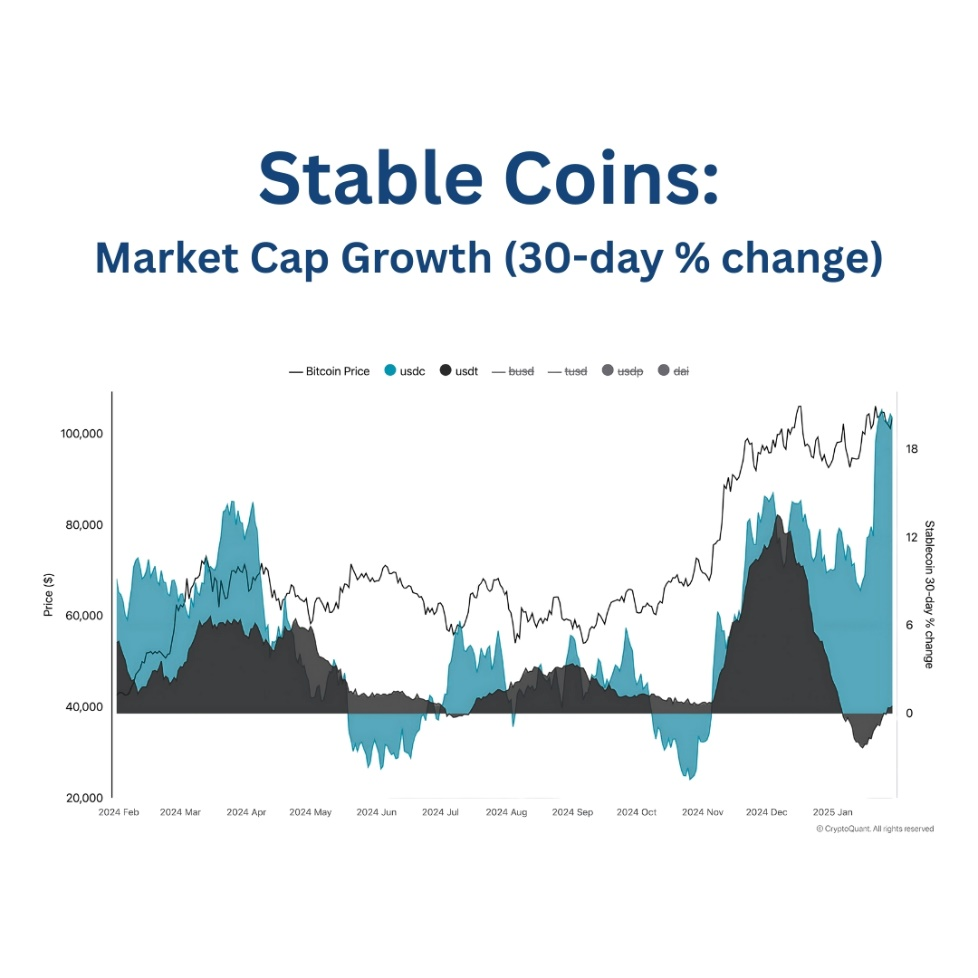
Stablecoins as the Liquidity Bridge
Stablecoins are central to this transformation. Leading issuers such as Tether (USDT) and Circle (USDC) have amassed market capitalizations of over $110 billion and $32 billion respectively, according to CoinGecko. While retail adoption originally drove this growth, institutions are now turning to stablecoins for cash settlement, FX hedging, and real-time liquidity.
In 2024, Visa, PayPal, and BlackRock all integrated stablecoins into their payments or treasury services. These moves signaled that stablecoins for investment use cases are maturing, not only as a store of value but as operational rails for institutional-grade financial processes.
The fusion of tokenized treasuries with stablecoins is especially powerful. Treasury-backed stablecoins—or “cash equivalents” structured with short-dated government debt—are being explored by startups like Mountain Protocol, which launched USDM, a stablecoin fully collateralized by tokenized U.S. Treasuries. The result is an emerging hybrid model that provides both price stability and yield exposure—attractive features for institutional cash managers.
On-Chain Money Markets: Efficiency and Transparency
Tokenized money markets offer several critical advantages over their traditional counterparts. First, settlement is near-instant, significantly reducing counterparty risk. Second, they allow composability with on-chain protocols—enabling collateralization, swaps, and liquidity provisioning within programmable environments.
Third, transparency is dramatically improved. Auditors and regulators can monitor token flows in real-time, enhancing compliance. This directly supports the mandates of regulatory bodies and institutional policyholders that require more verifiable financial infrastructure. For digital asset consulting for compliance teams, this transparency addresses long-standing concerns about shadow finance risks in opaque instruments.
Smart contracts embedded within these instruments also allow automated dividend distributions and transfer restrictions, enhancing operational control. This composability is particularly appealing for digital asset strategy consulting firms working with fund administrators, custodians, and large treasury desks.
Regulatory Tailwinds and Institutional Support
A significant tailwind for tokenized money markets is the evolution of regulatory frameworks. The Genius Act in the U.S., pending finalization, would offer legal clarity on the treatment of tokenized cash equivalents and stablecoins. In the EU, MiCA enforcement in 2025 formalized e-money token classifications, opening the door for licensed stablecoin issuance tied to sovereign bonds.
Meanwhile, the SEC’s increasing focus on real-world asset tokenization and the UK’s updated Financial Services and Markets Act (FSMA) further confirm a growing international consensus. This wave of regulatory recognition is critical for RWA tokenization investment consultants, who require legal certainty to integrate digital assets into long-term mandates.
BlackRock’s 2024 launch of the BUIDL fund, a tokenized U.S. Treasury fund on Ethereum in partnership with Securitize, marked a pivotal moment. The fund attracted over $500 million in deposits in under six months, highlighting institutional demand for on-chain cash management tools. With asset managers, banks, and crypto investment companies coalescing around regulated venues, the market structure is maturing rapidly.

Challenges Remain – But Infrastructure Is Catching Up
Despite progress, several hurdles persist. Cross-chain interoperability, custody standards, and data privacy need further refinement. Additionally, full integration into core banking systems remains limited, even as APIs improve.
However, technical advances such as permissioned DeFi protocols, MPC-enabled custody, and real-time oracles for off-chain asset validation are steadily resolving these pain points. The growing role of blockchain and digital asset consulting firms is also supporting smoother onboarding for institutions transitioning from legacy systems.
As real world DeFi investment and portfolio management consultants increasingly navigate these hybrid environments, the demand for education and structured due diligence is also expanding—something that content-driven firms like Kenson Investments are positioned to support.
A New Standard for Liquidity Management
The convergence of stablecoin investment consultant models and tokenized money markets is transforming how institutions manage idle capital. With rising interest rates and a hunt for secure yield, on-chain treasuries offer flexibility, speed, and visibility. Combined with regulatory traction and institutional validation, tokenized cash equivalents are likely to move from experimental allocations to core cash buckets.
This new liquidity paradigm doesn’t replace traditional structures—but augments them with digital-first optionality, giving asset managers and CFOs more tools for tactical allocation. It also aligns with the broader movement to bring real world assets on chain, powered by standards-compliant infrastructure and embedded governance logic.
Ecosystem Growth and Strategic Partnerships
The rise of tokenized money markets is also being accelerated by a surge in ecosystem collaborations between fintech innovators, traditional finance players, and infrastructure providers. In 2025, major blockchain platforms like Polygon, Avalanche, and Stellar have partnered with licensed financial institutions to pilot tokenized treasury products and stablecoin settlement layers. At the same time, middleware providers are integrating compliance-focused APIs and KYT (Know Your Transaction) protocols to satisfy the evolving needs of digital asset management companies and institutional compliance teams. These developments indicate a broader industry alignment around infrastructure that meets both liquidity demands and stringent oversight—further validating tokenized money market strategies as a viable institutional tool.
Learn More with Kenson Investments
Kenson Investments is committed to advancing digital asset understanding by providing clarity on institutional trends across tokenization, stablecoins, and compliance-aligned infrastructure. Through research-driven insights and educational content, Kenson helps participants better navigate the evolving landscape of tokenized money markets and beyond.
Disclaimer: The information provided on this page is for educational and informational purposes only and should not be construed as financial advice. Crypto currency assets involve inherent risks, and past performance is not indicative of future results. Always conduct thorough research and consult with a qualified financial advisor before making investment decisions.
“The crypto currency and digital asset space is an emerging asset class that has not yet been regulated by the SEC and US Federal Government. None of the information provided by Kenson LLC should be considered as financial investment advice. Please consult your Registered Financial Advisor for guidance. Kenson LLC does not offer any products regulated by the SEC including, equities, registered securities, ETFs, stocks, bonds, or equivalents”